
Manual Lymphatic Drainage
The lymphatic system is one of the body’s quieter systems. You may not think about it often, but it is working throughout the day to maintain fluid balance, support your immune system, and help transport waste away from the tissues.
Unlike the circulatory system, which uses the heart to continuously pump blood, the lymphatic system does not have one central pump. It relies on a network of vessels, lymph nodes, muscle movement, breathing, and gentle internal contractions to keep lymphatic fluid moving.
Understanding how this system works can make it easier to understand why movement, hydration, deep breathing, and Manual Lymphatic Drainage can feel so supportive.
What Is the Lymphatic System?
The lymphatic system is a body-wide network of vessels, lymph nodes, tissues, and organs. It works alongside the circulatory and immune systems to help maintain a healthy balance of fluid throughout the body.
As blood circulates, some fluid naturally moves out of the smallest blood vessels and into the tissues surrounding your cells. Most of that fluid is reabsorbed into the bloodstream. The remaining fluid is collected by tiny lymphatic vessels. Once it enters these vessels, it is called lymph.
Lymph may contain water, proteins, fats, immune cells, cellular debris, and other materials collected from the tissues. The lymphatic vessels carry this fluid through lymph nodes and eventually return it to the bloodstream.
This process helps prevent excess fluid and proteins from accumulating in the tissues while supporting the body’s natural immune and waste-removal processes.
Make it stand out
Lymph nodes are not simply storage areas. They are active immune centers.
Where Are Lymph Nodes Located?
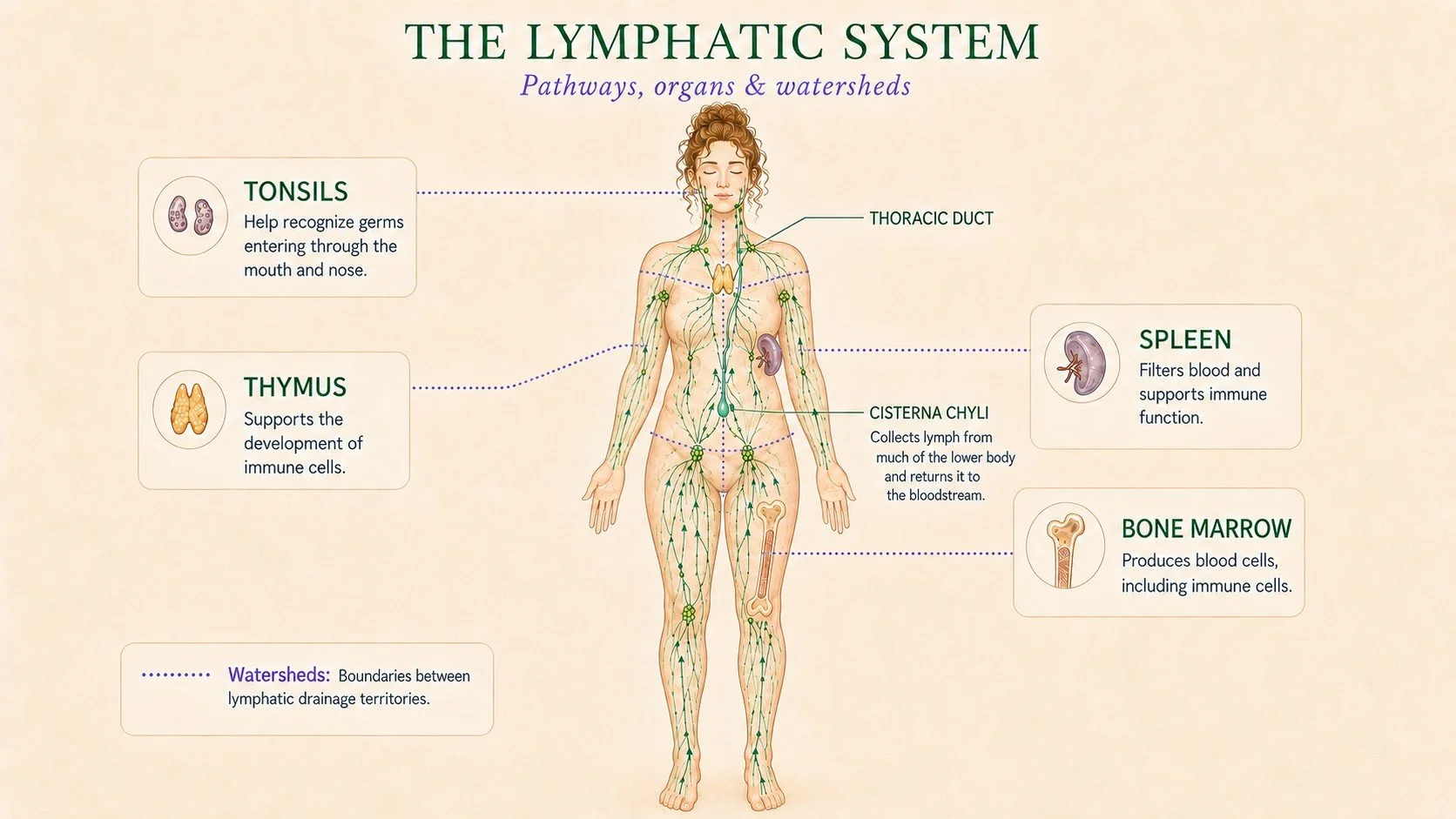
Hundreds of lymph nodes are located throughout the body. Some are close to the surface, while others are deeper within the chest, abdomen, and pelvis. They are often grouped along major lymphatic pathways.
Some of the main areas include:
Neck and under the jaw: These nodes help receive lymph from the head, face, mouth, and neck.
Armpits: The axillary lymph nodes receive lymph from the arms, chest, breast tissue, and upper back.
Chest and abdomen: Deeper nodes help receive lymph from the lungs, digestive organs, and other internal structures.
Groin: The inguinal lymph nodes receive lymph from the legs, lower abdomen, external pelvic region, and buttocks.
Behind the knees: These nodes help receive lymph from portions of the lower legs and feet.
Lymph nodes are not simply storage areas. They are active immune centers. As lymph passes through a node, immune cells monitor it for bacteria, viruses, damaged cells, and other unfamiliar material. When your body is responding to an infection, nearby lymph nodes may temporarily become enlarged or tender because immune activity has increased.
How Does Lymph Move Through the Body?
Lymph travels in one direction through a network of increasingly larger vessels. One-way valves help prevent it from flowing backward.
Several natural forces help move lymph:
Contraction of the muscles during everyday movement
Deep breathing and changes in pressure within the chest and abdomen
Gentle contractions within the walls of lymphatic vessels
Pulsing from nearby arteries
Eventually, most lymph enters the thoracic duct, the largest lymphatic vessel in the body. The thoracic duct receives lymph from both legs, the abdomen, and the left side of the upper body. The right lymphatic duct receives lymph from the upper-right side of the body.
Both ducts return lymph to the bloodstream near the base of the neck. From there, the liver, kidneys, digestive system, and circulatory system continue working together to process nutrients, balance fluids, and remove waste the body no longer needs.
The lymphatic system is therefore an important part of the body’s natural detoxification process, but it does not work alone. It is one part of a much larger, beautifully connected system.
More Than Fluid Drainage
The lymphatic system has several important responsibilities:
Fluid balance: It returns excess fluid and proteins from the tissues to the bloodstream.
Immune support: Lymph nodes and other lymphatic tissues help identify and respond to pathogens and foreign material.
Fat absorption: Specialized lymphatic vessels in the small intestine absorb dietary fats and transport them into circulation.
Waste transport: It helps carry cellular debris and other materials away from the tissues so they can be processed by the body.
Other lymphatic organs and tissues, including the spleen, thymus, tonsils, and bone marrow, also contribute to immune function and the production, development, or storage of immune cells.
What Is Manual Lymphatic Drainage?
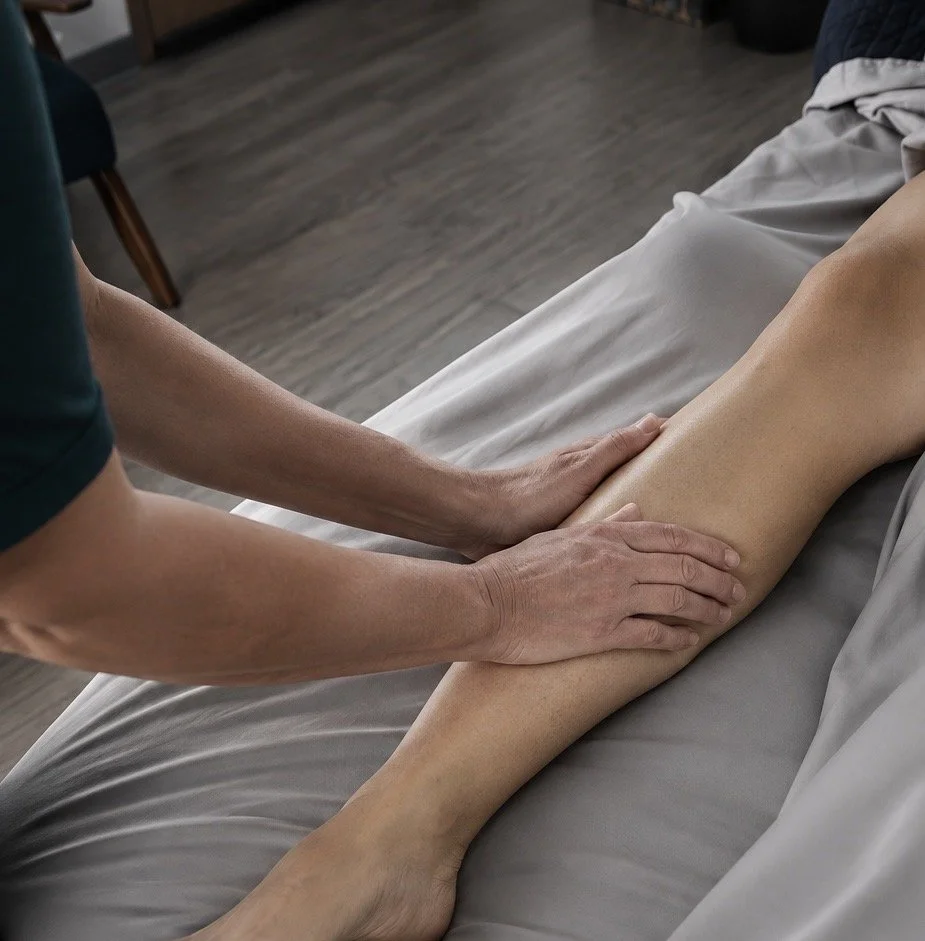
Manual Lymphatic Drainage, often called MLD, is a gentle, rhythmic hands-on technique designed to support the natural movement of lymphatic fluid.
MLD is very different from deep tissue or traditional Swedish massage. Because many initial lymphatic vessels are located just beneath the skin, the pressure is light, slow, and precise. The movements follow specific lymphatic pathways and begin by supporting areas closer to where lymph returns to the bloodstream before working farther away.
The goal is not to force fluid through the body or “flush out toxins.” Instead, MLD works with the body’s anatomy and natural rhythms to encourage fluid movement in an appropriate direction.
Many clients find MLD deeply calming. The light pressure and repetitive rhythm may help the nervous system settle, making the session feel quiet, restorative, and grounding. Clients may seek MLD for general wellness, relaxation, feelings of heaviness, or certain types of mild swelling and fluid retention when treatment is safe and appropriate.
What Can You Expect During a Session?
Before your session, we will review your health history, current symptoms, and what you would like support with. This is especially important because MLD may need to be modified or postponed for certain health conditions.
During treatment, you can expect light, gentle movements rather than deep muscular pressure. Depending on the length and purpose of your session, treatment may include the face and neck, abdomen, arms, or legs. Your session will always be adjusted around your comfort, health history, and goals.
Vega Massage provides Manual Lymphatic Drainage for wellness support. We do not provide treatment or management of diagnosed or suspected lymphedema. Clients with lymphedema should seek care from a Certified Lymphedema Therapist or another appropriately qualified healthcare provider.
Supporting Your Lymphatic System Between Sessions
Your lymphatic system is working all the time. A few simple habits can support its normal movement and your overall health:
Take regular walks or movement breaks, especially if you sit for long periods.
Practice slow diaphragmatic breathing, allowing your abdomen to gently expand as you inhale.
Stay adequately hydrated according to your body’s needs and your healthcare provider’s guidance.
Wear clothing that feels comfortable and does not unnecessarily restrict movement.
Prioritize rest, balanced nutrition, and gentle movement that feels appropriate for your body.
Supporting your lymphatic system does not require an extreme cleanse or complicated routine. Consistent movement, breathing, hydration, and appropriate hands-on care can complement the work your body is already doing every day.
If you are curious about Manual Lymphatic Drainage or would like help deciding whether it may be a good fit for you, we are always happy to answer your questions.
This information is for educational purposes and is not a substitute for medical advice, diagnosis, or treatment.